


The Challenge: Conveying Fragile Plastic Caps Without Damage
A US manufacturer of plastic closures for food and consumer goods needed a reliable way to transfer newly molded flip-top caps to the next production stage. The caps had to travel approximately 200 feet (61 m) across the plant while still warm and open, without damaging their living hinges or high-gloss surfaces.
The new caps were particularly sensitive to impact and friction immediately after molding. Pressure conveying had already caused cracked hinges and damage to the cap skirts and dispensing tips. A conventional belt conveyor would require an elevated 200-foot installation, while manual handling would introduce additional labor, floor space requirements, and hygiene concerns.
The conveying solution needed to meet several requirements:
- Prevent product damage to the hinge, skirt, tip, and high-gloss surface.
- Transport warm, open caps directly from injection molding without an additional cooling stage.
- Convey caps 200 feet above a forklift aisle and below an overhead crane.
- Eliminate manual handling between molding and the secondary operation.
- Maintain production hygiene while minimizing floor space requirements.
The Facts: Material Specifications and System Requirements
Material Specifications:
- Product: Flip-top plastic dispensing caps
- Material: Polypropylene (PP)
- Dimensions: 38 mm diameter × 35 mm height
- Surface: High-gloss cosmetic finish
- Condition at pickup: Warm and open, directly from the mold
System Requirements:
- Conveying rate: 200 caps per minute
- Conveying distance: Approximately 200 ft (61 m)
- Conveying route: Above a forklift aisle and below an overhead crane
- Pipe installation: Floor-supported to maintain crane clearance
- Product quality: No damage to hinges, skirts, tips, or surfaces
- Material handling: Fully automated transfer without manual contact
- Temperature: No additional heat introduced during conveying
The Solution: Gentle Pneumatic Vacuum Conveying of Plastic Caps
Kongskilde developed a vacuum conveying system that draws fragile plastic caps through the conveying line rather than pushing them under pressure. Before installation, the customer’s team tested the caps at the Kongskilde Technology Center in Illinois to identify the appropriate airflow, piping configuration, and discharge method.
The resulting system combines adjustable airflow, smooth piping, and a cushioned discharge to transport warm plastic caps while limiting impact, friction, and heat exposure.
System Components:
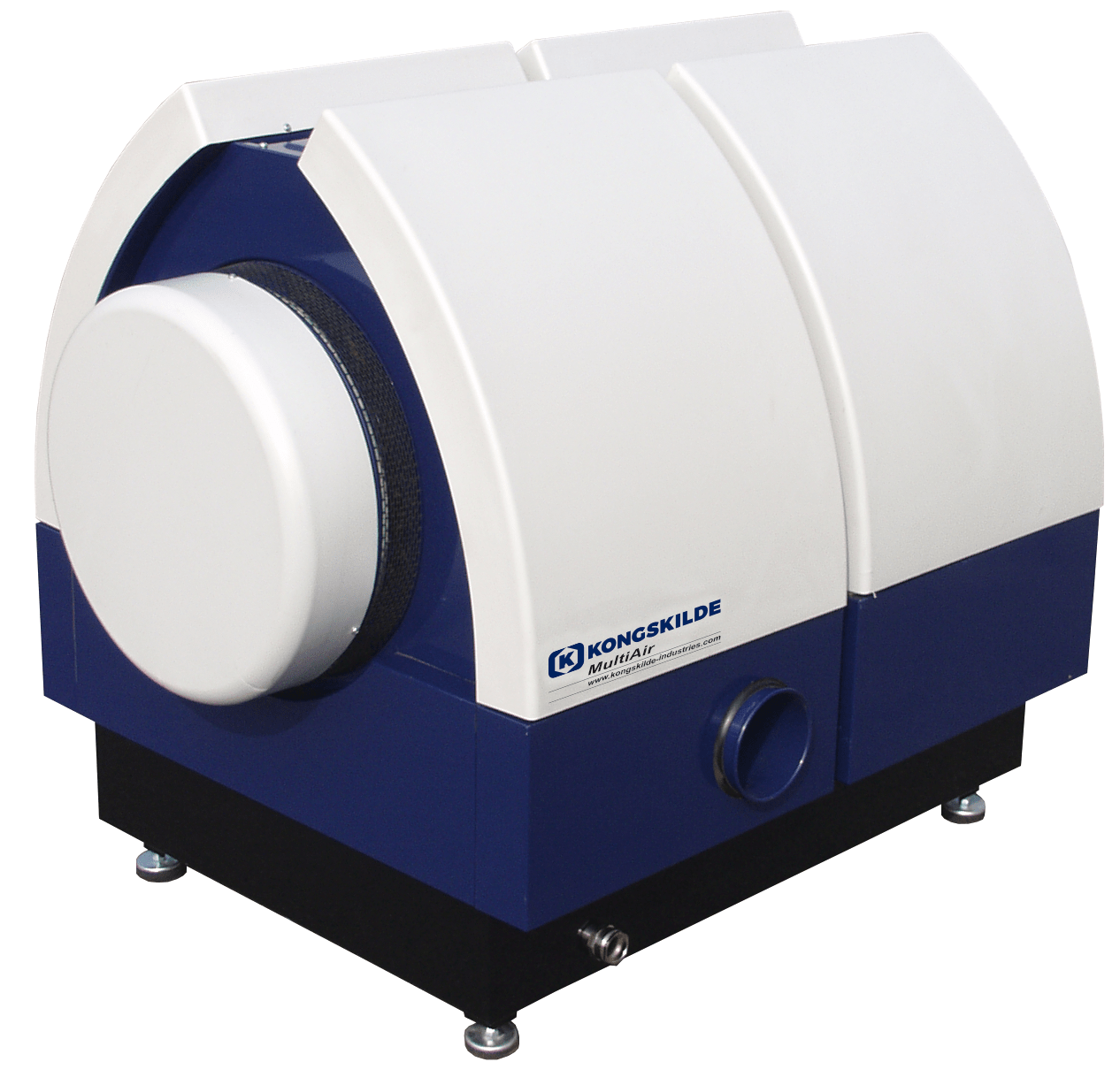
- MultiAir blower with variable frequency drive (VFD): Supplies conveying air at a controlled speed. Operators can adjust airflow to the minimum level needed to transport the caps without damaging their surfaces or hinges.
- Clear conveying pipes: Smooth, transparent butyrate piping with gradual bends reduces friction, scuffing, and plastic angel hair. The transparent design also allows operators to monitor cap movement and adjust conveying speed.
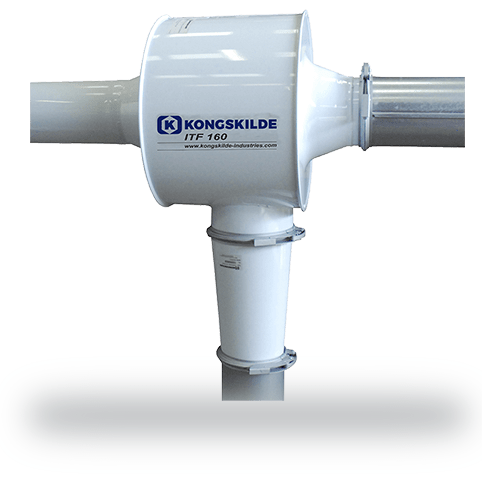
- ITF Venturi: Venturi creates the vacuum that draws caps through the conveying line without allowing them to pass through the blower fan or contact moving mechanical components.
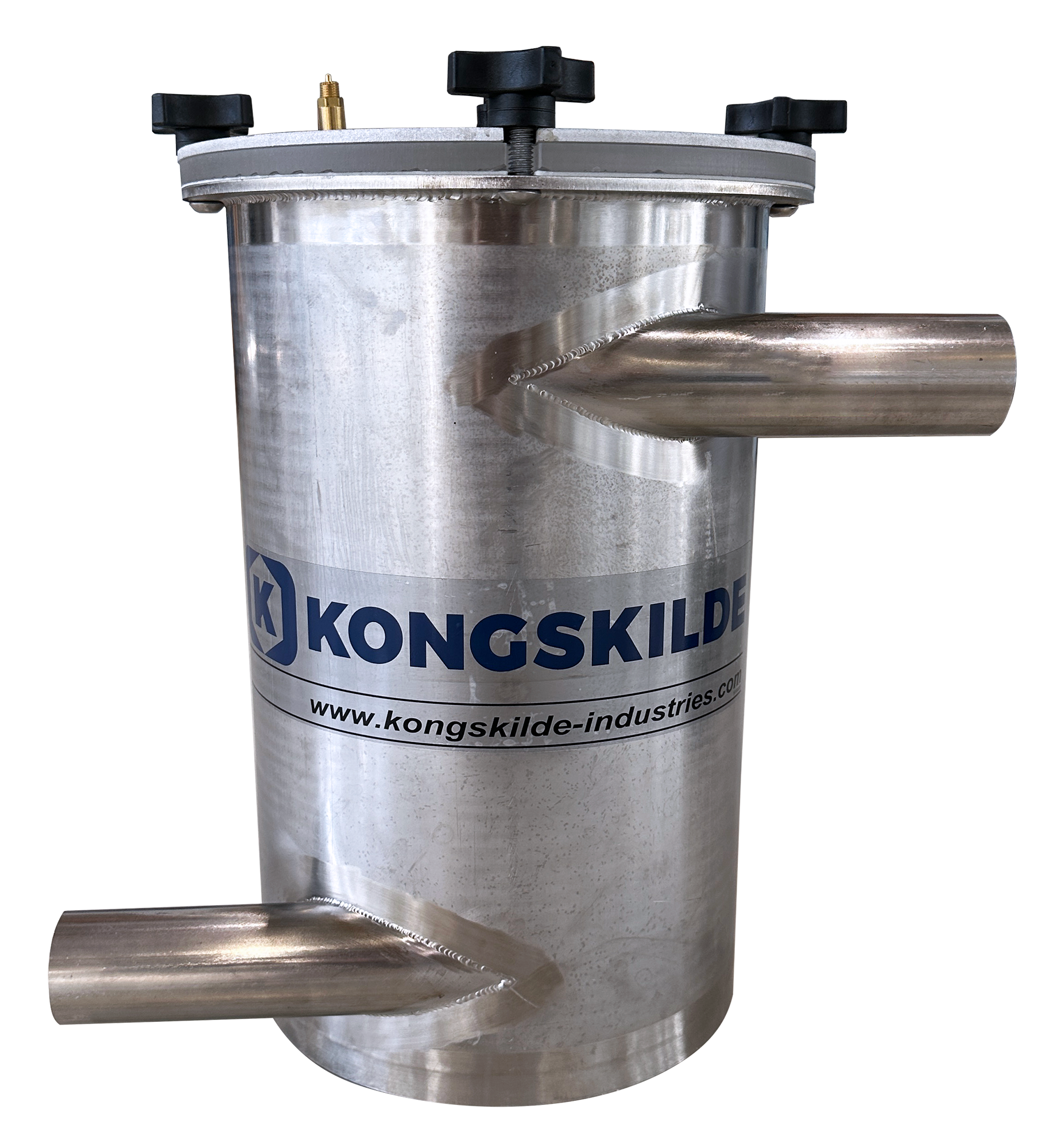
- Cloth air separator: Cloth separator provides a cushioned discharge at the end of the conveying line. The flexible cloth slows the caps before releasing them into a hopper that feeds the secondary operation.
How the System Works
- Warm, open caps leave the injection mold and travel along a short belt to the conveying intake.
- The MultiAir blower supplies airflow to the ITF Venturi, creating vacuum in the conveying line.
- Caps are drawn through the smooth piping and transported across the production plant.
- Ambient air entering at the pickup point helps cool the caps during conveying.
- A cloth air separator slows the caps and separates them from the conveying air.
- Undamaged caps drop into a hopper that feeds the next production stage.
The system provides automated transport from molding to secondary processing while protecting the fragile caps throughout the journey.
Advantages & Benefits: Damage-Free Automated Plastic Cap Conveying
From the first production run, the vacuum conveying system delivered caps without damage, matching the results achieved during testing at the Kongskilde Technology Center.
Undamaged Caps and Consistent Product Quality
Gentle vacuum conveying, smooth piping, and a cushioned discharge protect the caps’ living hinges and high-gloss surfaces. Caps arrive at the secondary operation in the same condition they left the mold.
Automated Transfer Without Manual Handling
Caps move directly from the molding machine to the next production stage without manual contact. This reduces handling requirements, frees up production floor space, and supports hygiene standards for plastic packaging.
Cooling During Conveying
Ambient air drawn into the system at the pickup point helps cool the warm caps during transport. The conveying process introduces no additional heat, helping protect the caps immediately after molding.
Adjustable Airflow and Capacity for Growth
The MultiAir blower’s variable frequency drive allows operators to maintain the lowest effective conveying speed. Operating at less than half its available capacity, the system also provides room for longer conveying distances, higher production rates, or heavier caps.
Quiet Operation
The soundproofed MultiAir blower operates quietly alongside other production equipment, helping maintain a more comfortable working environment.
Simple Installation and Operation
The complete system was delivered ready to assemble and fits into the existing production process without complex operating procedures.
“It fits right into the process. There’s not a learning curve. It’s simple, it works.”
Engineering Manager, Plastic Closures Manufacturer

The new hinged 38 mm cap is often used in consumer products such as syrups, condiments, dressings, sauces, and honey.

Operators adjust the MultiAir blower from a touchscreen interface, while the variable frequency drive keeps airspeed just high enough to move the caps without damage or wasted energy.

At the end of the line, the cloth air separator slows each cap to a cushioned stop.

Automated transfer from press to secondary operation removes manual handling and supports packaging hygiene standards.
Download the full case study:
Explore Kongskilde Solutions for Plastic Conveying
Kongskilde offers pneumatic conveying systems for plastic components and finished products, helping manufacturers automate material transfer, minimize manual handling, and protect product quality.

Need to Convey Fragile Plastic Parts?
Find out how Kongskilde can help automate plastic part conveying while protecting product quality and reducing manual handling.