


Contaminated regrind is costing you more than you think
Recycled plastic rarely comes clean. Shredded material and regrind contain dust, angel hair, film fragments, and other light contaminants that degrade output quality and put stress on your production equipment.
The result: The result: lower material value, higher processing costs, frequent cleaning, and a recycling loop that never quite closes.
The solution: separation systems that remove contaminants at the source, and conveying systems that keep that clean material moving, protecting your process, your equipment, and your output quality.
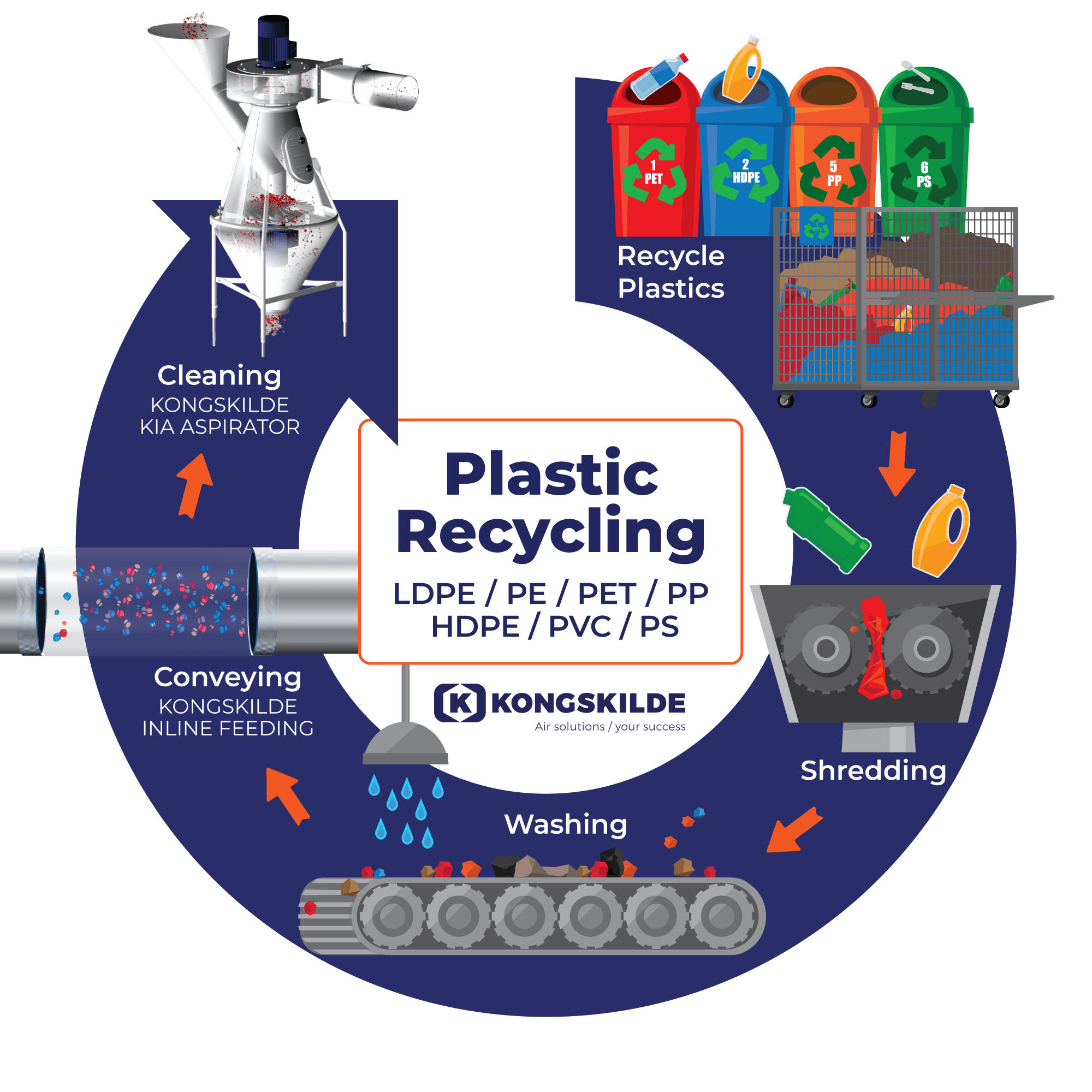
Cleaner Material. Lower Costs. A Shorter Path Back to Production.
Without proper separation upstream, these impurities carry through into your product, increasing reject rates, accelerating equipment wear, and forcing costly pelletization steps that could otherwise be avoided.
When separation and dedusting are handled correctly, the benefits compound across your entire process:
- Higher-Grade Recycled Output Remove dust and light impurities before they affect product quality or downstream equipment.
- Inline Recycling Without Pelletization Return cleaned regrind directly to the production line, cutting a processing step and reducing operating costs.
- Reduced Equipment Wear and Downtime Cleaner material means less abrasion, fewer blockages, and more predictable maintenance.
- A Better Work Environment Contained systems reduce airborne dust at the source, improving air quality on the production floor.
Dedusting and Separation Solutions
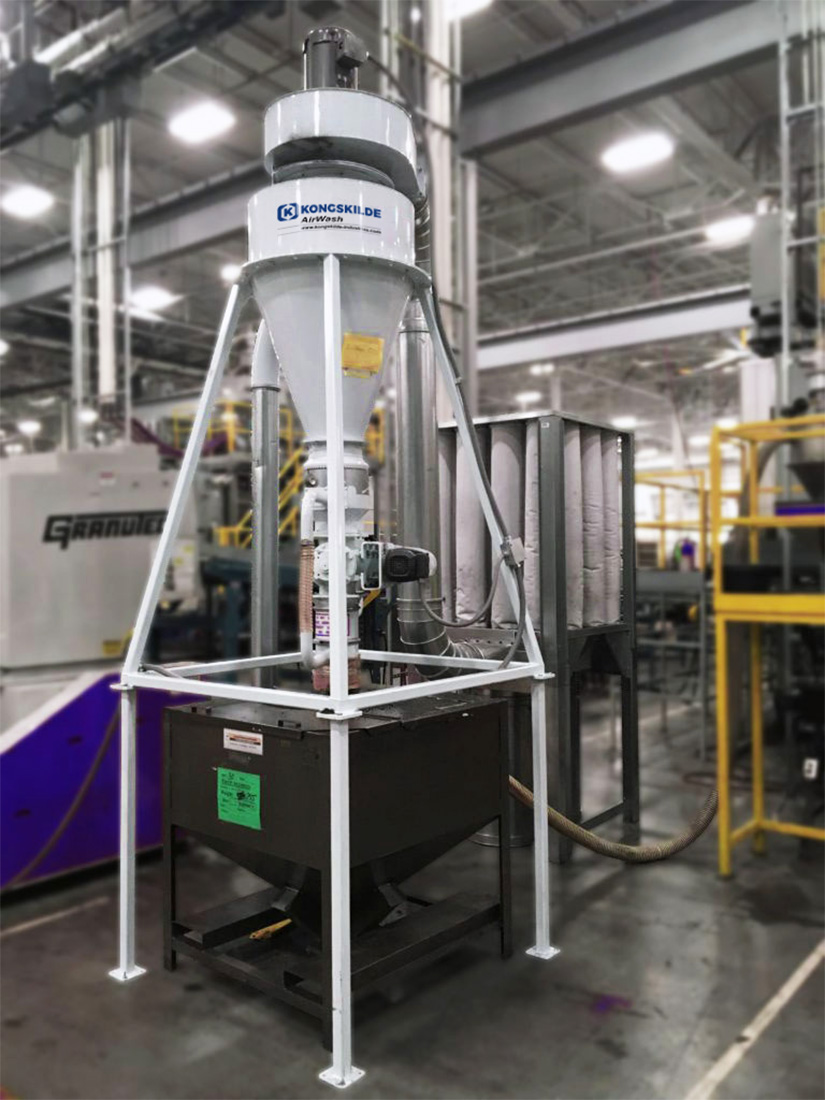
Kongskilde’s KIA Aspirator and AirWash system are purpose-designed to separate impurities and dust from recycled and granulated plastic. Both integrate with existing pneumatic conveying infrastructure and can be configured to your specific material and process requirements.
KIA Aspirator
If your regrind or shredded material contains dust, film, or lightweight contaminants, the KIA removes them before they reach your process, protecting output quality and reducing material losses.
AirWash System
The AirWash cleans regrind and conveys it in a single pass, eliminating the need for pelletization and returning material directly to your production line at a fraction of the processing cost.


Conveying Systems Built for Plastic Recycling
Separation only solves part of the equation. Material still needs to move reliably to and from your sorters, between processing stages, and into production, often across multiple passes and within tight space constraints. Kongskilde’s conveying systems handle that movement automatically and can be configured to your specific material, capacity, and layout requirements.
- Automates material movement between production stages
- Keeps clean and reject material fully separated
- Delivers high-capacity throughput within tight height and layout constraints
- Minimizes dust exposure with fully enclosed material flow
- Reduces equipment wear and downtime from blockages
- Scales with growing throughput and facility upgrades
Proven Results in Plastic Recycling Operations

Case Study
Automated Conveying for Efficient Optical Sorting of Recycled PET – Novelplast
After investing in optical sorting technology, a PET recycler needed a reliable way to automate material flow and achieve consistent, high-purity output.
The Kongskilde Advantage
Our experience across the plastics industry becomes a practical advantage for you. From optimizing material flow to improving product quality and process efficiency, we apply proven knowledge to help you solve challenges and achieve reliable results.
75+ Years
Trusted by plastics manufacturers around the world for over 75 years.
Complete Solutions
Fully engineered, installed, and backed by ongoing support from day one.
Your Expert
Expert guidance based on deep process and application knowledge.
Performance Guarantee
Every custom system is backed by a full performance guarantee.
Start the conversation today.
Ready to improve your recycling processes? Let’s get started.

We’re more than engineers. We’re problem solvers.
Our job doesn’t stop at installation. Whether you need technical support, ongoing maintenance or fast spare parts delivery, we’re here to keep your systems performing at their best.
End-to-end service. From installation and commissioning to global on-site support.
Smart maintenance. Including preventive service, performance monitoring and flexible service packages.
Easy access. Spare parts, manuals, videos and technical documents when and where you need them.