


Key Challenges in Medical and Pharmaceutical Manufacturing
Medical device and pharmaceutical packaging production requires consistent material flow while limiting unnecessary operator contact with components and keeping controlled production areas clear. Manufacturers may need to move small finished parts directly from moulding presses to assembly, supply plastic pellets and granules to production equipment, or remove film trim and rejected material from cleanroom converting lines.
- Reducing manual contact with finished components: Small medical components may need to move from production directly to assembly, storage, or packaging with minimal operator handling.
- Maintaining consistent production flow: Manual bins, carts, forklifts, and mechanical conveyors can create additional handling steps between production processes.
- Handling delicate or lightweight components: Tubes, caps, closures, syringe components, and other moulded parts can vary considerably in size, shape, weight, and sensitivity to impact.
- Supplying plastic raw materials: Plastic pellets and granules may need to be transferred from external silos or bulk receiving points to internal storage and production equipment.
- Removing cleanroom production waste: Continuous medical film trim, off-cuts, flash, and rejected material must be removed without allowing waste to accumulate around the production line.
- Meeting material and cleanability requirements: Stainless steel may be preferred for selected conveying components, but equipment materials must be evaluated against the requirements of the specific application.
Our Medical Component Solutions
Medical and pharmaceutical production requires controlled material movement around tightly configured equipment. Kongskilde pneumatic systems reduce manual transfers by conveying plastic components to assembly or packaging, supplying pellets and granules to moulding equipment, and removing film trim and production rejects.
Enclosed pipes can be routed around existing machinery or overhead to conserve floor space. Systems are configured around the material, required capacity, conveying distance, and production environment.
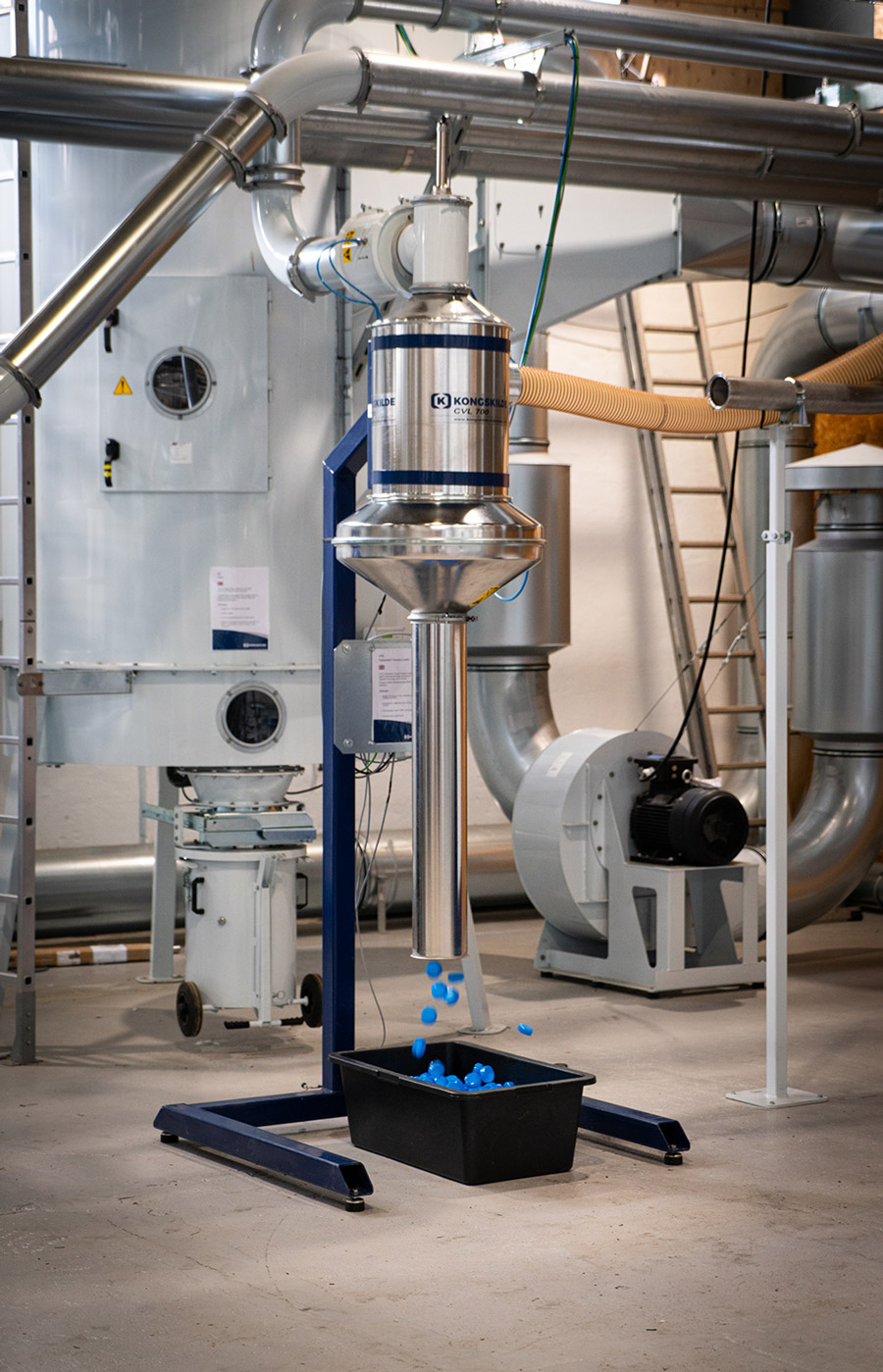
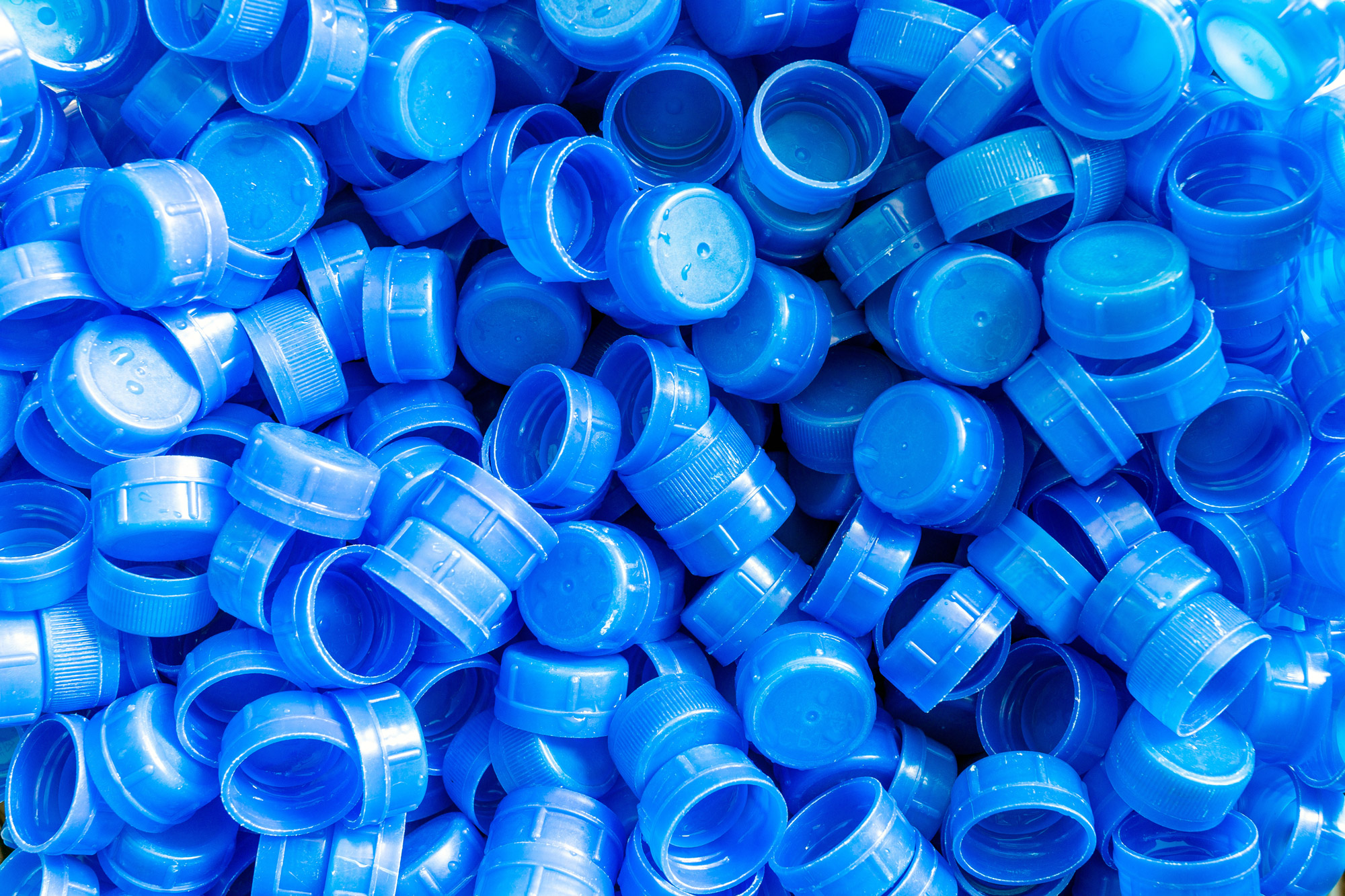
- Finished Goods Conveying: Automatically transfer small plastic components, including caps, closures, and moulded device parts, from production to assembly, storage, inspection, or packaging. Controlled batch conveying reduces manual box transport and direct component handling.
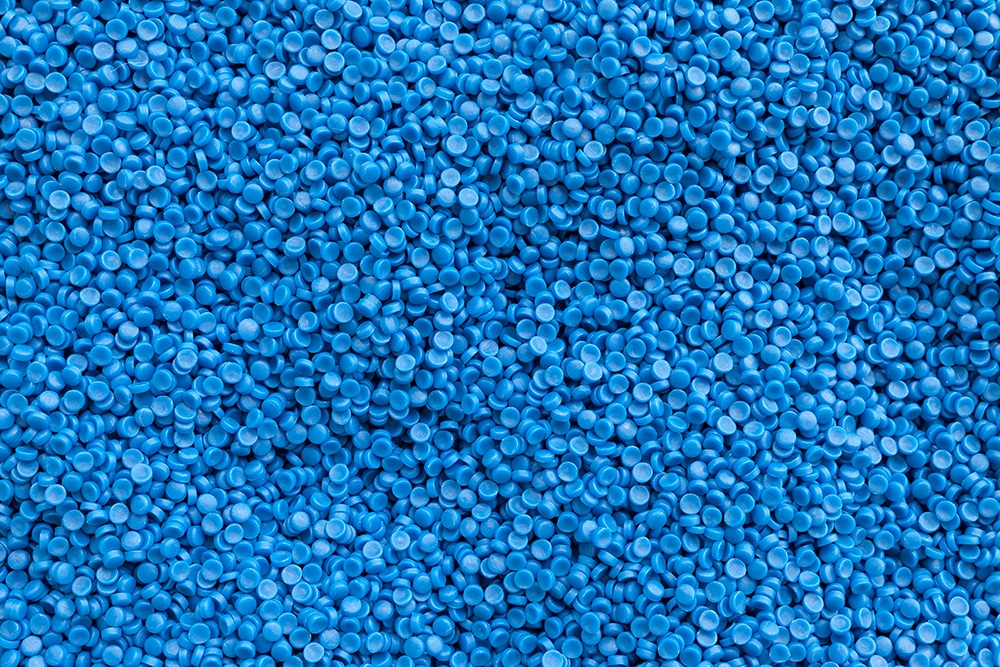
- Bulk Plastic Material Conveying: Move plastic pellets and granules from external silos or bulk receiving points to internal storage, day bins, moulding equipment, or multiple production destinations.
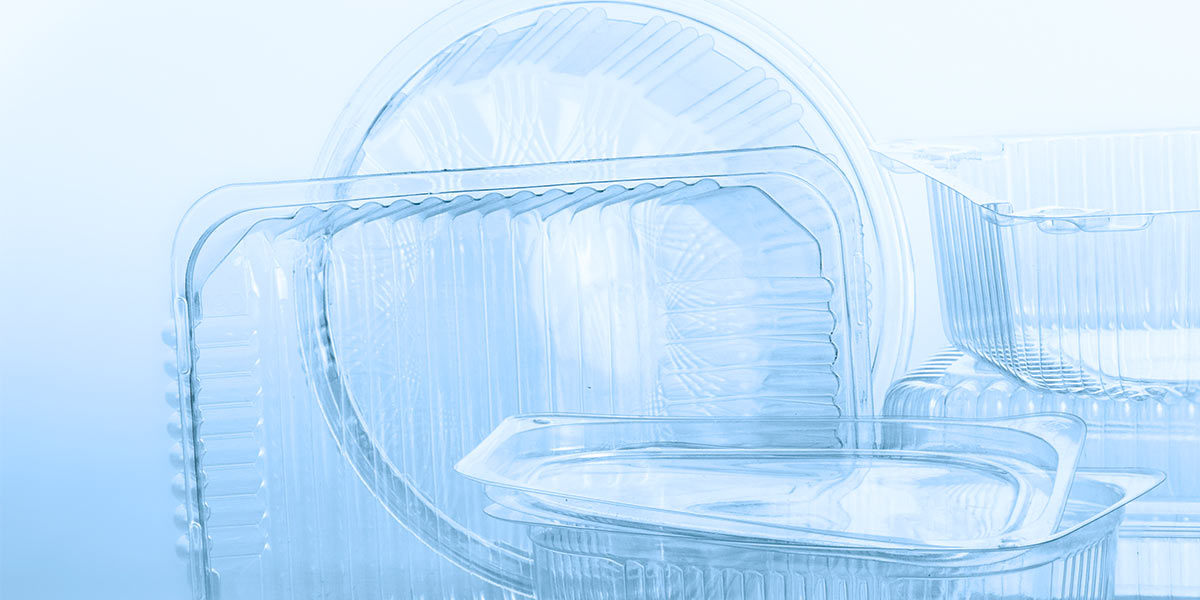
- Medical Film Trim Extraction: Continuously remove lightweight edge trim from medical film and pharmaceutical packaging during slitting, winding, laminating, and converting.
- Production Waste and Reject Removal: Collect film off-cuts, flash, runners, rejected components, and other production scrap at the source and convey it to central collection, recycling, or disposal areas.
Featured Case Study
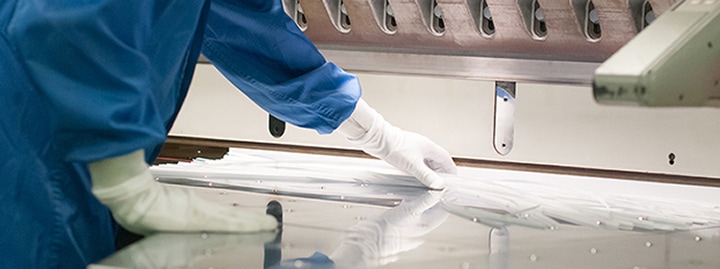
Trim Handling In A Clean Room For Production Of Flexible Packaging
SABIC Snij-Unie processes customized polycarbonate film and sheet in an air-controlled clean room, and needed a trim handling system that protects clean room conditions without sacrificing extraction performance.
Proven Solutions Across the Medical Industry
We support a wide range of pharmaceutical and medical producers with solutions tailored to their specific processes, products, and goals.
Don’t see your application listed?
Don’t worry, we’re up for the challenge. Contact us, and we will find the right solution for your operation.
The Kongskilde Advantage
Our experience across the pharmaceutical industry becomes a practical advantage for you. From material flow to product quality and process efficiency, we apply proven knowledge to help you solve challenges and achieve reliable results.
Our Guarantee
Every custom system is backed by a full performance guarantee.
Complete Solutions
Fully engineered, installed, and backed by ongoing support from day one.
Your Expert
Expert guidance based on deep process and application knowledge.
Global Support
A worldwide presence backed by regional support.
Start the conversation today.
Every project is different, and so is every custom solution we deliver.
Tell us about your challenges, and one of our experts will follow up to learn more about your operation and discuss how we can help.
- No obligation conversation
- Solutions tailored to your process and materials
- Support for new installations and system upgrades
- Help identifying bottlenecks and improving material flow
- Compact system designs for space-constrained facilities
Frequently Asked Questions
Pharmaceutical & Medical | Component conveying and material handling
How do pneumatic systems improve pharmaceutical and medical material handling?
Pneumatic systems automate transfers of small plastic components from production to assembly or packaging, while separate extraction systems remove trim and rejects. This reduces manual lifting, box transport, and direct handling of components.
How are caps, closures, and small moulded components conveyed to assembly or packaging?
The CVL Component Vacuum Loader picks up, conveys, and discharges finished plastic components in batches. It delivers caps, closures, and other small moulded parts to assembly, packaging, or storage, reducing manual transfers and reliance on belt conveyors.
Pharmaceutical & Medical | Packaging waste and cleanroom extraction
Can Kongskilde systems remove medical packaging waste?
Yes. Pneumatic extraction removes medical film trim, off-cuts, and production rejects through enclosed pipes to collection. Continuous removal reduces waste buildup and manual clearance around converting and packaging equipment.
How can pneumatic waste extraction keep cleanroom areas clear?
Trim can be extracted directly at production equipment and conveyed to collection outside the cleanroom, reducing manual bin handling. Airflow and equipment placement are planned around the room’s pressure and environmental requirements.
Pharmaceutical & Medical | Energy use and system design
How can pneumatic systems reduce energy use in pharmaceutical and medical production?
Producers can reduce energy use by sizing the system to actual material throughput or waste volumes rather than running an oversized setup. Energy use depends on material characteristics, conveying route, and required capacity. Kongskilde engineers match blowers and components to the application to avoid unnecessary airflow.